Russian Literature: A Very Short Introduction by Catriona Kelly
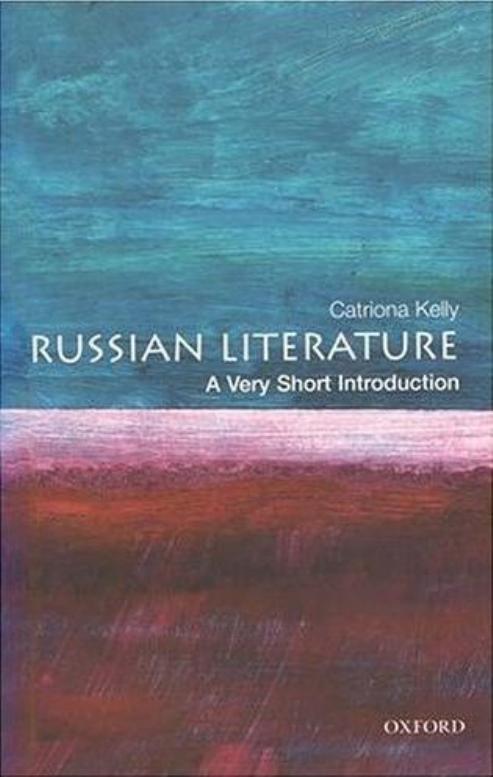
Author:Catriona Kelly
Language: eng
Format: mobi, epub, pdf
Published: 0101-01-01T00:00:00+00:00
‘A
wakenin
g nobl
e feelin
gs with
14. Cartoon of two writers by Yu. Gorokhov.
my lyre’
that Tolstoy’s successors will provide them with ethical stimulation of
just this kind. It was no accident that the first literary award to be
supported by Western investors in Russia should have been the Booker
Prize for the Russian novel, inspired by the quixotic notion of reviving
the genre in the country that many still considered its natural
homeland.
97
Chapter 6
‘And don’t dispute
with fools’
Men, women, and society
For you, my enchantresses,
Only for you, my beauties . . .
(Pushkin, dedication to Ruslan and Ludmilla, 1820)
It would be hard to choose a better example of the difficulties raised by
translating Pushkin than the final phrase of ‘Monument’. In English, it
sounds perfectly banal, like a phrase from a guide to ‘making friends
and influencing people’. Once again, register plays a part: the Russian
word glupets has a folksy resonance that would make ‘And do not
squabble with the daft’ in some ways a more adequate rendering. Even
so, modern readers are likely to wonder at the combination of
apparently incompatible themes in these last two lines. What
connection could there be between a dignified command to a poet’s
muse to ‘be obedient to the command of God’ and an apparently trivial
piece of savoir vivre? (To be sure, the phrase bears some relation to a
supposed quotation from the Koran jotted down in a draft of Evgeny
Onegin, ‘Don’t quarrel with a fool’, but since the person citing the
quotation was Evgeny himself, and it was preceded with a bare-faced
piece of flippancy, ‘There’s plenty of common sense in the Koran’, the
sacred text was reduced here to nothing more than a conduct book.)
Yet the rough draft of ‘Monument’ indicates that ‘And don’t dispute
with fools’ was firmly in Pushkin’s head from the start of composition. It
98
is the only line in the final three stanzas that was set down straight away
in the form that it has in the final text. And the view of the poet as
associated not only with the transcendent world of religious and
mystical appearance, but also with the banalities of high society, comes
up again and again in Pushkin’s later poetry. ‘The Poet’ (1827), for
example, is structured round an opposition between ‘the concerns of
the empty-headed monde’ (that is, of high society) and ‘the divine
word’ (that is, of poetic inspiration), an opposition spanned by the
poet himself, who lives alternately in each domain. Appealing to the
Romantic myth of artists as socially isolated, Pushkin also invokes
another and contradictory myth of the artist as honnête homme,
well-spoken man of the world. This myth had been introduced to
Russian culture in the late eighteenth century by Nikolay Karamzin,
who had asserted, in a famous article, ‘Why Russia Has So Few
‘An
Literary Talents’ (1802), that without proper access to polite society
d don’t
it was hard for a writer to educate his taste, however learned he
might be.
disp
ute
In late eighteenth- and early nineteenth-century Russia, the reading
with
of literature was an obligatory polite accomplishment for both men
fools’
and women; indeed, writing itself was perceived as an agreeable social
skill. Large numbers of women in the aristocracy and gentry kept an
al’bom, a mixture of a scrap-book and a commonplace book,
Download
Russian Literature: A Very Short Introduction by Catriona Kelly.epub
Russian Literature: A Very Short Introduction by Catriona Kelly.pdf
This site does not store any files on its server. We only index and link to content provided by other sites. Please contact the content providers to delete copyright contents if any and email us, we'll remove relevant links or contents immediately.
4 3 2 1: A Novel by Paul Auster(12393)
The handmaid's tale by Margaret Atwood(7764)
Giovanni's Room by James Baldwin(7346)
Asking the Right Questions: A Guide to Critical Thinking by M. Neil Browne & Stuart M. Keeley(5775)
Big Magic: Creative Living Beyond Fear by Elizabeth Gilbert(5772)
Ego Is the Enemy by Ryan Holiday(5450)
The Body: A Guide for Occupants by Bill Bryson(5097)
On Writing A Memoir of the Craft by Stephen King(4944)
Ken Follett - World without end by Ken Follett(4732)
Adulting by Kelly Williams Brown(4574)
Bluets by Maggie Nelson(4556)
Eat That Frog! by Brian Tracy(4540)
Guilty Pleasures by Laurell K Hamilton(4449)
The Poetry of Pablo Neruda by Pablo Neruda(4109)
Alive: The Story of the Andes Survivors by Piers Paul Read(4033)
White Noise - A Novel by Don DeLillo(4010)
Fingerprints of the Gods by Graham Hancock(4004)
The Book of Joy by Dalai Lama(3986)
The Bookshop by Penelope Fitzgerald(3853)
